


Geospatial Center Research
The field of geospatial science, also known as Geographic Information Science (GIScience), is an emerging interdisciplinary field that focuses on the use of Geographic Information Systems (GIS); remote sensing; global positioning system (GPS); positioning, navigation and timing (PNT); geomatics; geoinformatics; and photogrammetry to study people, places and processes on Earth, the Moon, Mars and beyond.
Beyond these core disciplines, it involves cutting-edge technologies such as smart devices, cloud computing, autonomous systems, robotics and predictive analytics powered by artificial intelligence. Geospatial science is the key enabler of the fourth Industrial Revolution — a digital revolution providing a new dimension of life through the fusion of the physical, digital and biological spheres.
Research Areas
The Geospatial Center allows for researchers from a variety of disciplines to develop strategic collaborations. The synergistic impact of the Geospatial Center offers great energy and insights for broadening current research efforts beyond what has been accomplished individually.
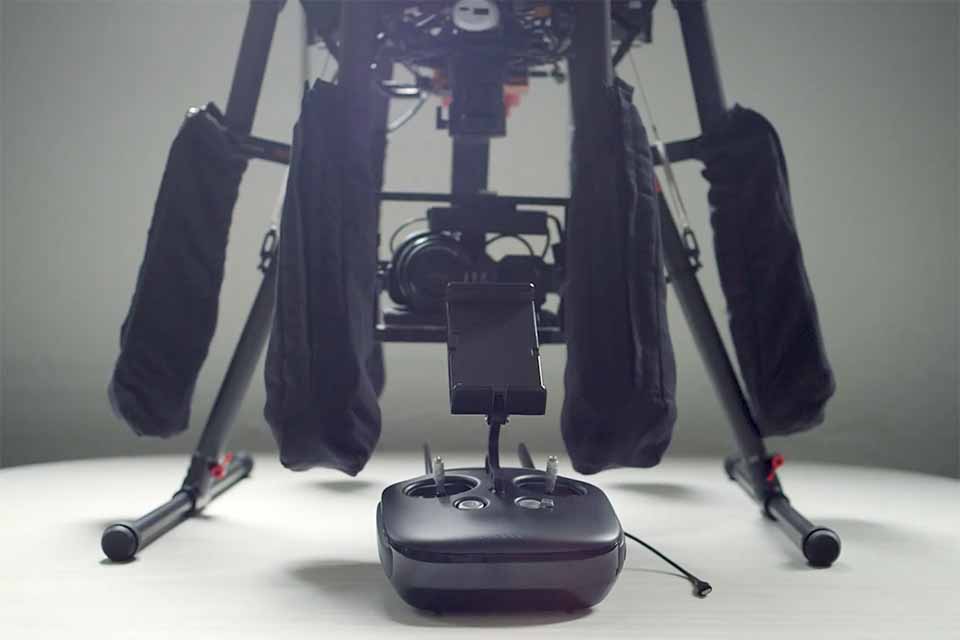
As geospatial science is a continually growing field, researchers at SLU are using emerging and adaptive technological opportunities to respond to grand research challenges. The foundation of geospatial research at SLU is utilizing emerging and adaptive technology, including remote sensing, artificial intelligence/machine learning, unmanned aerial systems, cloud and edge computing, software development, social media and smartphone technology.
Our research and innovation pillar drives discovery and the application of cutting-edge methodologies to address complex challenges in a variety of fields. Over the last several years, SLU intentionally recruited or retained 15 faculty members with geospatial expertise across diverse academic disciplines, creating a strong enterprise-wide network of researchers conducting world-class research in the following areas:
- Core Geospatial Science
- GeoAI
- Precision and Quantum Agriculture
- Business and Economic Geospatial Insights
- CareMosaic: Community-Centered Health and Resilience
- GEOINT for National Security
- Ecosystem and Biodiversity Conservation
- Infrastructure resilience and arctic security
- Quantum Sensing, CubeSAT and biosensing
Impact
One of the distinguishing features of the Geospatial Center is that its foundation is built on SLU’s mission – the pursuit of Truth for the service of humanity – and the Jesuit tradition, which fosters a culture of excellence in teaching, research, and service and calls us to pursue justice, improve the human condition and reflect on moral and ethical issues.
Building on this rich tradition, the Geospatial Center is in a unique position to work and collaborate with industry, government agencies, and community organizations in unique ways to advance the corpus of academic and applied research, expand the research capacity, and create ethical leaders who work or will work in the expanding geospatial fields.
Outcomes will include:
- Top national geospatial center
- Core contributor to St. Louis regional development
- Collaborative expertise to respond to previously unanswerable questions
- Coordinated geospatial services across SLU schools and departments
- Academic industry partner of choice throughout the St. Louis region
Research Labs
Des Peres Hall, Room 209
3694 West Pine Mall
Saint Louis, Missouri 63108
The Remote Sensing Lab (RSL) at Saint Louis University is staffed by 12 research scientists, data scientists, postdoctoral researchers, and software engineers, along with 10+ graduate students. With over $2M annual research expenses, the lab advances geospatial science through machine learning and AI-driven analysis of multi-scale remote sensing data, addressing critical challenges in food and water security, environmental change, and socio-ecological resilience.
Learn more at remotesensinglab.org.
Morrissey Hall, Rm 1900
This lab has three computers running Windows 7. The computers in these labs contain the following software:
- 7-Zip
- Analyst’s Notebook
- eCognition Developer
- ESRI: ArcPro, ArcMap, ArcCatalog, ArcScience, ArcGlobe, ArcPad, and ArcGIS Explorer
- GeoDA, GeoDaSpace, PCI Geomatica
- MS-Office Suite
- QGIS
- STATA, SPSS, R, Python
- Trimble Pathfinder Office
- Web Browsers: Internet Explorer, Mozilla Firefox, Google Chrome